
The Method
Our Soap Making Process
Sanora Skin soaps are made using the traditional cold-process method, a technique that has been used in soap making for centuries.
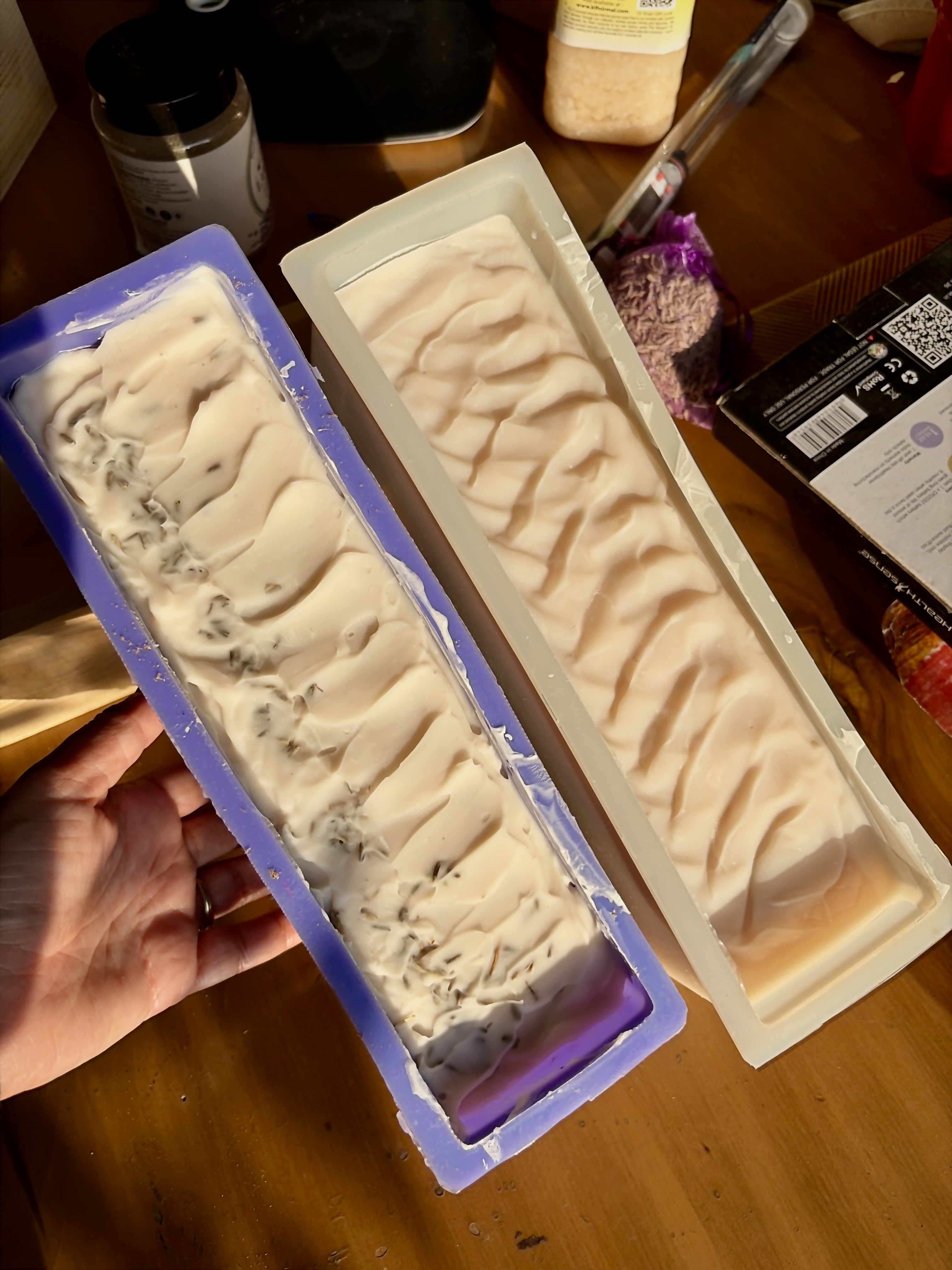
In this process, carefully measured oils are combined with a lye solution to begin the natural process of saponification — the chemical reaction that transforms oils into soap. Once blended, the mixture is poured into molds where it slowly solidifies.
Unlike industrial soaps that are manufactured quickly, cold-process soaps require patience. Each batch must cure for several weeks, allowing excess moisture to evaporate and the soap to become milder and longer lasting.
During this time, the bar develops its final texture, hardness, and skin feel. The result is a soap that is gentle, balanced, and rich in naturally occurring glycerin.
Every batch at Sanora Skin follows this slow process, because good soap cannot be hurried. It is the time, care, and attention behind each bar that makes handmade soap truly special.

Why Handmade Soap
Handmade soap is very different from the commercial bars most people are used to. Traditional cold-process soap retains the natural glycerin produced during soap making — a skin-loving ingredient that helps keep the skin soft and moisturized.
Because handmade soap is crafted in small batches, it allows greater care in the selection of oils, ingredients, and formulations. Instead of being designed primarily for mass production and long shelf life, handmade soap focuses on skin feel, quality, and thoughtful formulation.
At Sanora Skin, this traditional method allows us to create soaps that are gentle, nourishing, and made with intention. Each bar carries the character of a handcrafted product — something made slowly, carefully, and with respect for the craft.